Skip to content
Studio Michael Müller

Work Series:
Mentale Treibhölzer (Handicap), 2020/2021

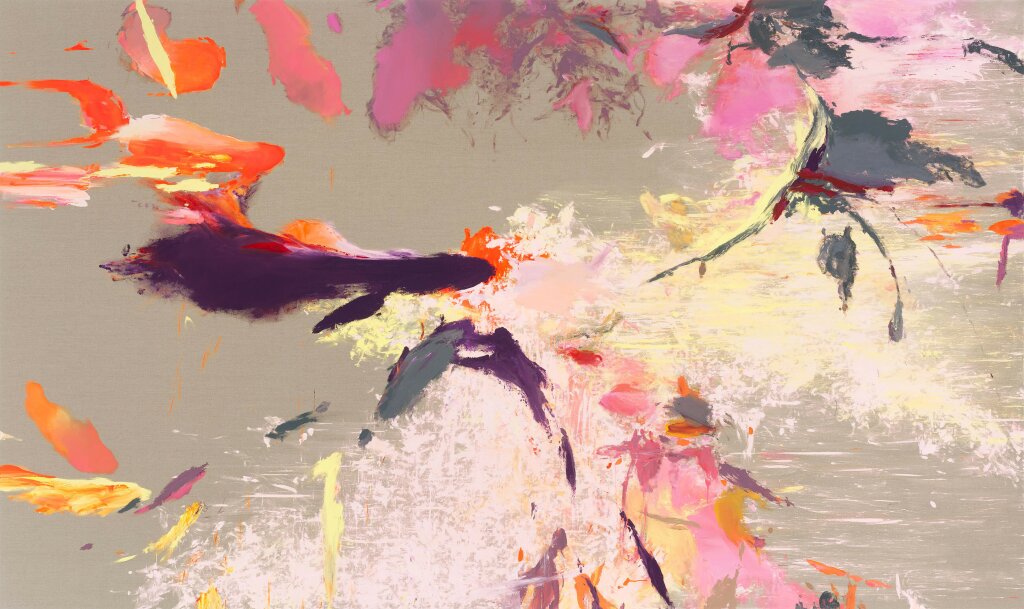
For the series Mentale Treibhölzer (Handicap) [Mental Driftwoods (Handicap)], Michael Müller primarily used his fingers and palms as painting tools to apply the paint directly from the paint cans onto the unprimed canvas of the large-scale works. In addition, he used special, dysfunctional painting tools that complicate and hinder the process of painting, such as windshield wipers, a mop, a scalpel, paint rollers of which he used only the tip, or encrusted, dried brushes. A reference to the origins of painting in Upper Paleolithic cave painting, whose “artists” did not have specially made painting tools that served only this specific purpose, such as brushes, but applied iron oxide pigments (red), ocher (yellow), and charcoal (black) directly to rock walls by hand or found and misappropriated means, such as chewed twigs. At the same time, Müller deconstructs the myth of the artist‘s ‚genius‘ hand, which directly, adequately, and perfectly brings inspired thought to the painting surface and vouches for the artist’s unique, individual artistic gesture, the signature, as well as guaranteeing the authenticity of expression. A modern conception, which, however, in modern times is already backdated to Neolithic painting, to which the hand negatives found in caves and sprayed on the walls supposedly testify: a mark placed in the material environment that attributes images to a specific individual as creator.

  • Hades Mercato (DAS ENTSTEHEN UNFERTIGER BEGRIFFE), 2020
    Acrylic and lacquer on Belgian linen
    314 × 443 × 4,5 cm

  • Flotsam deep in the Western Pacific Region (DAS HEILENDE BILD), 2020
    Acrylic and lacquer on Belgian linen
    Two part work, each: 365 × 314 × 4,5 cm

  • Omus Kathara (EINE TASSE TEE IM GARTEN VON MONET), 2020
    Acrylic and lacquer on Belgian linen
    443 × 314 × 4,5 cm

  • Sandlaufkäfer (DIE BEFREIUNG DER FORM AUS DEM SCHMERZ), 2020
    Acrylic and lacquer on Belgian linen
    443 × 314 × 4,5 cm

  • Sol gelida (I met Pynchon in Houston), 2021
    Acrylic and lacquer on Belgian linen
    235 × 395 × 4,9 cm

  • Alien Athena (DIE NOTWENDIGKEIT SCHWULER ABSTRAKTION IM KAMPF GEGEN EINE VERMEINTLICHE KULTURELLE ELITE), 2020
    Acrylic and lacquer on Belgian linen
    365 × 314 × 4,5 cm

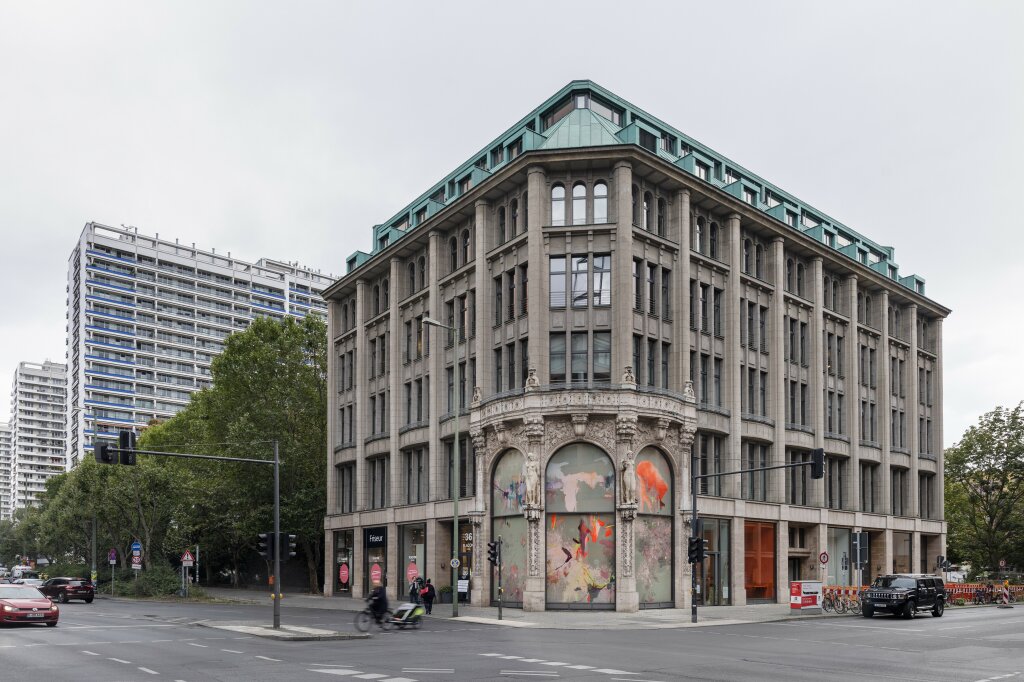
  • Installation view:

    Bikini on Mars / Anton im Bastrock
    Solo Exhibition at Galerie Thomas Schulte, Berlin
    9 September – 9 October 2020

  • Installation view:

    Ästhetisches Urteil und Selbstlosigkeit:
    sich einer Sache aussetzen mit entleertem Blick und ohne Halt
    Solo Exhibition at Galerie Thomas Schulte, Berlin
    19 October – 6 November 2020

  • Installation view:

    Ästhetisches Urteil und Selbstlosigkeit:
    sich einer Sache aussetzen mit entleertem Blick und ohne Halt
    Solo Exhibition at Galerie Thomas Schulte, Berlin
    19 October – 6 November 2020

  • Installation view:

    Ästhetisches Urteil und Selbstlosigkeit:
    sich einer Sache aussetzen mit entleertem Blick und ohne Halt
    Solo Exhibition at Galerie Thomas Schulte, Berlin
    19 October – 6 November 2020

  • Installation view:

    Ästhetisches Urteil und Selbstlosigkeit:
    sich einer Sache aussetzen mit entleertem Blick und ohne Halt
    Solo Exhibition at Galerie Thomas Schulte, Berlin
    19 October – 6 November 2020

The paintings in the series were created spontaneously, without a draft—apart from the format of the canvases, only the first color with which Müller began the painting process was set. In the painting process, a structure gradually crystallized and the composition emerged, to which the painter constantly reacted. The pictorial elements, intuitively and directly brought onto the canvas from the free-drifting, pre-conceptual subconscious without sketching or pre-painting—like mental driftwood washed up from the unconscious onto the shore of the material world—question the origin of abstract pictorial ideas. The spontaneity of the application of paint was mediated by the misappropriated painting tools, the handicap that made painting difficult, and in this way interrupted in the conflict between the immediacy and freedom of the origin and the practical execution, and became dependent on factors outside the artist’s absolute power of disposal. The paintings of the series become hybrids that have become alien to the artist, divested of him.